WORKSHOP SERIES: Mapping and dissemination of research and strategies on the use of Artificial Intelligence to support environmental sustainability

ABOUT

The project "Digital Technologies and Environmental Sustainability in Brazil” is carried out by Cetic.br | NIC.br and supported by the UK Government under the Foreign, Commonwealth & Development Office (FCDO) - Digital Access Programme (DAP)

Among the outcomes of the projet are the Workshop Series “Mapping and Dissemination of Research on Artificial Intelligence and Environmental Sustainability.” This initiative aims to map and disseminate research on the use of artificial intelligence (AI) in support of environmental sustainability, while also addressing and mitigating the risks associated with its adoption. It places particular emphasis on fostering knowledge exchange and identifying research priorities among leading AI research centres in Brazil and the United Kingdom.

Participants are expected to:
⦁    Share their institutional research agendas and concrete examples of work at the intersection of AI and environmental sustainability;
⦁    Map existing gaps and future research directions in the field;
⦁    Contribute to building research networks that enable future collaboration.

The first in-person workshop will take place in London, UK, on 8–9 June 2026. The second workshop will be held in São Paulo, Brazil, from 1–3 September 2026. A report mapping concrete applications of AI in support of environmental sustainability will be prepared based on the contributions gathered during the workshops.

CONTEXT

Digital technologies, particularly Artificial Intelligence (AI), offer significant potential to accelerate evidence-based decision-making, support decarbonisation strategies, and strengthen climate resilience efforts, making them essential assets in addressing the climate emergency. However, the availability of reliable evidence and robust indicators to assess the environmental footprint of AI remains limited. This gap is largely attributed to fragmented and inconsistent measurement practices across the AI lifecycle, including training, inference, and supply chains, a challenge that is even more pronounced in countries of the Global South.

At the same time, the inclusive and equitable dissemination of digital and AI-enabled technologies depends on the presence of key enabling conditions, such as universal and meaningful connectivity. This is particularly relevant in regions of high strategic importance for climate action, such as the Amazon region, where digital divides risk constraining the adoption and impact of technology-based environmental solutions. In summary, the project aims to expand and systematize the evidence base required to inform public policy and strategic decision-making, while enhancing the visibility and scalability of AI applications that contribute to environmental sustainability, with a particular focus on addressing measurement gaps and contextual challenges in Brazil.

Program

Monday, 08 June

09:00 - 09:30

Registration and Reception

09:30 - 10:00

Opening Remarks and Introductions

  • Alessandra Lustrati (FCDO-DAP, United Kingdom)
  • Alexandre Fernandes Barbosa (Cetic.br|NIC.br, Brazil)
10:00 - 10:15

Project Presentation and Alignment of Objectives and Expected Outcomes

  • Alexandre Fernandes Barbosa (Cetic.br|NIC.br, Brazil) Moderator
  • Fábio Senne (Cetic.br|NIC.br, Brazil)
10:15 - 10:45

Keynote I: Where Are We and What Is the Role of Artificial Intelligence? AI Applications in Earth Observation and Extreme Climate Event Prediction

  • Paulo Nobre (INPE|JSC - WCRP, Brazil) Keynote
  • Fábio Senne (Cetic.br|NIC.br, Brazil) Moderator
10:45 - 12:00

Panel I: Public Policies for Sciences, Technology and Innovation on AI and Sustainability research

The panel will explore the challenges for science, technology, and innovation policies in fostering a research agenda focused on AI and sustainability. Discussions will include the development of national strategies and policy frameworks in Brazil and the United Kingdom, as well as future perspectives for research funding in this area.

  • Alessandra Lustrati (FCDO-DAP, United Kingdom) Moderator
  • Cristina Shimoda (Ministry of Science, Technology and Innovation, Brazil)
  • Emma Albury (Department for Science, Innovation and Technology, United Kingdom)
12:00 - 13:00

Lunch Break

13:00 - 13:30

AI and Sustainability: Literature Overview

  • Maria João Sousa (Climate Change AI) Keynote
  • Fábio Senne (Cetic.br|NIC.br, Brazil) Moderator
  • Flora Ariza (University of São Paulo (USP), Brazil)
13:30 - 15:00

Panel II: AI applications in support of mitigation of climate change

AI Centres and individual researchers from Brazil and the United Kingdom will be invited to give short presentations addressing the current landscape of research on AI and sustainability, including concrete examples of ongoing investigations in the area. The presentations will be followed by a roundtable discussion aimed at identifying common research interests and opportunities for future cooperation.

  • Alexandre Fernandes Barbosa (Cetic.br|NIC.br, Brazil) Moderator
  • André Carlos Ponce de Leon Ferreira de Carvalho (AI Recreating Environments (IARA) / University of São Paulo (USP), Brazil)
  • Hywel T P Williams (Centre for Environmental Intelligence / University of Exeter, United Kingdom)
  • João Marcos Travassos Romano (Brazilian Institute of Data Science (BI0S) / University of Campinas (Unicamp), Brazil)
  • Yanxi (Zoe) Zhou (Global Impact Group / Grantham Research Institute, United Kingdom)
15:00 - 15:15

Coffee Break & Networking

15:15 - 15:45

Keynote II: Public Policies for Digital Services and Sustainability: The Brazilian Rural Environmental Registry (CAR)

  • Francisco Gaetani (Ministry of Management and Innovation in Public Services, Brazil) Keynote
  • Fábio Senne (Cetic.br|NIC.br, Brazil) Moderator
15:45 - 16:45

Mapping the ‘Blind Spots’ and Untapped Potential of AI to Support the Climate Agenda

Building on the presentations delivered by AI Centres and individual researchers from Brazil and the United Kingdom, participants will discuss potential research gaps at the intersection of AI and sustainability. As an outcome of the group exercise, the discussion is expected to identify priority areas for further development, as well as opportunities for future collaboration and joint research initiatives.

  • Alexandre Fernandes Barbosa (Cetic.br|NIC.br, Brazil) Moderator
  • Fábio Senne (Cetic.br|NIC.br, Brazil) Moderator
16:45 - 17:00

Closing

Tuesday, 09 June

09:00 - 09:30

Registration and Reception

09:30 - 10:00

Keynote III: AI for biodiversity monitoring: The case of Innovate 4 Nature (I4N) - UK

  • Jenna Lawson (UK Centre for Ecology & Hydrology - UKCEH, United Kingdom) Keynote
  • Julia Wolff (FCDO-DAP, United Kingdom) Moderator
10:00 - 11:00

Panel III: Public Policies for AI and Impacts on Environment

The panel will examine the relationship between AI and sustainability through the lens of environmental policy. Topics will include the development of national strategies and regulatory frameworks in Brazil and the United Kingdom, as well as international discussions taking place within the framework of the UN Climate Change Conferences (COP).

  • Julia Wolff (FCDO-DAP, United Kingdom) Moderator
  • Gregório Furtado Swiech (Ministry of Environment, Brazil)
  • Ethan Summers (Department for Environment, Food & Rural Affairs, United Kingdom)
11:00 - 12:15

Panel IV: AI applications in support of adaptation of climate change

AI Centres and individual researchers from Brazil and the United Kingdom will be invited to give short presentations addressing the current landscape of research on AI and sustainability, including concrete examples of ongoing investigations in the area. The presentations will be followed by a roundtable discussion aimed at identifying common research interests and opportunities for future cooperation.

  • Luiz Alexandre Costa (Brazilian Observatory on AI - OBIA, Brazil) Moderator
  • Erick G. Sperandio Nascimento (Surrey Institute for People-Centred AI / University of Surrey, United Kingdom)
  • Fernando Alves Rochinha (Center of Excellence in Artificial Intelligence for Renewable Energy / COPPE / Federal University of Rio de Janeiro (UFRJ), Brazil)
  • Marcelo Dottori (Center for Artificial Intelligence (C4AI) / University of São Paulo (USP), Brazil)
  • Marion Dumas (LSE Grantham Research Institute, United Kingdom)
12:15 - 13:15

Lunch Break

13:15 - 14:45

Panel V: Risks and Potential impacts of AI to the Environment

AI Centres and individual researchers from Brazil and the United Kingdom will be invited to give short presentations addressing the current landscape of research on AI and sustainability, including concrete examples of ongoing investigations in the area. The presentations will be followed by a roundtable discussion aimed at identifying common research interests and opportunities for future cooperation.

  • Alexandre Fernandes Barbosa (Cetic.br|NIC.br, Brazil) Moderator
  • Ângelo Brandelli Costa (National Institute of Science and Technology for Simulation and Monitoring in Support of Individuals During Extreme Climate Events (INCTSiM-AI) / Pontifical Catholic University of Rio Grande do Sul (PUCRS), Brazil)
  • Ethan Aines (Maxwell Centre | University of Cambridge, United Kingdom)
  • Wagner Meira (Center for Innovation in Artificial Intelligence for Health (CI-IA) / Federal University of Minas Geraes (UFMG), Brazil)
14:45 - 15:00

Coffee Break & Networking

15:00 - 16:00

Panel VI: Global Perspectives for Ethical and Sustainable AI

The panel will address global challenges surrounding the implementation of ethical and sustainable AI applications. Drawing from international debates on AI principles and governance, participants will examine how environmental sustainability has been incorporated into emerging frameworks and discussions on responsible AI.

  • Luiz Alexandre Costa (Brazilian Observatory on AI - OBIA, Brazil) Moderator
  • Davor Orlic (International Research Centre On Artificial Intelligence - IRCAI, Brazil)
  • Leona Verdadero (UNESCO, France)
16:00 - 16:45

Mapping the research on the AI risks to the Climate Agenda

Building on the presentations delivered by AI Centres and individual researchers from Brazil and the United Kingdom, participants will discuss potential research gaps at the intersection of AI and sustainability. As an outcome of the group exercise, the discussion is expected to identify priority areas for further development, as well as opportunities for future collaboration and joint research initiatives.

  • Alexandre Fernandes Barbosa (Cetic.br|NIC.br, Brazil) Moderator
  • Fábio Senne (Cetic.br|NIC.br, Brazil) Moderator
16:45 - 17:00

Closing Remarks and Next Steps

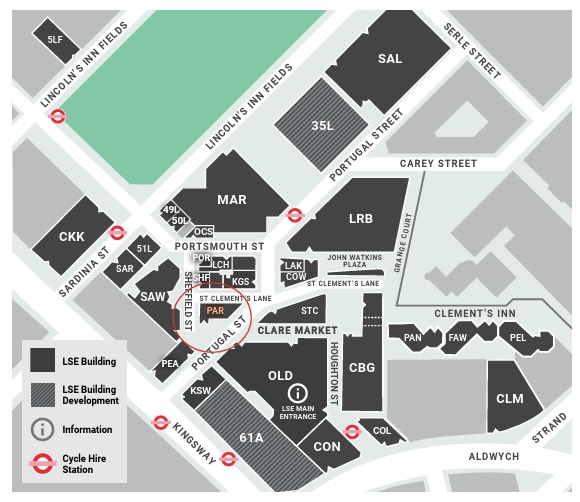
Venue

London School of Economics (LSE)

LSE Parish Hall (PAR)

Sheffield Street, London, WC2A 2HA 

Room (PAR.LG.03)
[It is recommended to enter from Portugal Street. The room LG.03 is on the lower ground floor. A lift is available for those with accessibility needs]

For more information: https://share.google/cu9p6juoU5Zr5xdSl

Event location map

For more Information: